
Trump Announces 3-Day Russia-Ukraine Ceasefire Starting Today – NDTV
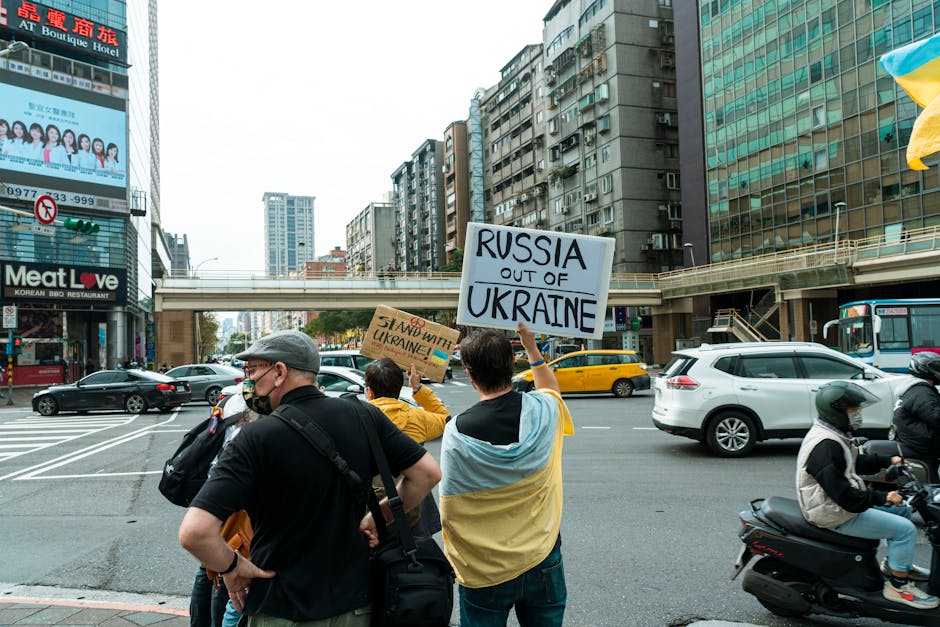
Former U.S. President Donald Trump announced a unilateral three-day ceasefire proposal for the conflict in Ukraine, urging both Moscow and Kyiv to halt all military operations starting today, October 26, 2023. The unexpected declaration, made from his Mar-a-Lago residence in Palm Beach, Florida, outlined a temporary pause intended to facilitate initial de-escalation and open a pathway for future peace negotiations.
Background: The Protracted Conflict and Its Global Ramifications
The ongoing conflict between Russia and Ukraine represents a profound geopolitical crisis, rooted in decades of complex historical, political, and security grievances. What began as a simmering conflict in 2014 escalated dramatically into a full-scale invasion in February 2022, reshaping the international order and triggering widespread humanitarian and economic fallout.
Historical Precursors to the Full-Scale Invasion
The genesis of the current conflict can be traced back to the dissolution of the Soviet Union in 1991, when Ukraine declared its independence. Russia, viewing Ukraine as part of its historical and cultural sphere of influence, grew increasingly wary of Kyiv's westward drift, particularly its aspirations for closer ties with NATO and the European Union. Tensions flared significantly in 2014 following a pro-Western revolution in Ukraine, known as the Maidan Revolution, which led to the ousting of a pro-Russian president. In response, Russia annexed the Crimean Peninsula and supported separatist movements in the Donbas region of eastern Ukraine, igniting a low-intensity conflict that claimed thousands of lives over eight years. This period saw the establishment of the self-proclaimed Donetsk People's Republic and Luhansk People's Republic, sustained by Russian military and financial support, effectively creating a frozen conflict zone along the contact line. International efforts, including the Minsk Agreements, failed to achieve a lasting political resolution, leaving the underlying grievances unresolved.
The Full-Scale Invasion and Initial Phases (Feb-Mar 2022)
On February 24, 2022, Russia launched a full-scale invasion of Ukraine, citing concerns over NATO expansion, the alleged persecution of Russian speakers, and the need for "demilitarization" and "denazification" of Ukraine. The invasion commenced with missile strikes across the country, followed by a multi-pronged ground offensive targeting Kyiv, Kharkiv, Mariupol, and other major cities. Russian forces initially advanced rapidly, attempting to seize the capital and install a puppet government. However, fierce Ukrainian resistance, bolstered by Western military aid and intelligence, thwarted the initial assault on Kyiv, forcing Russian troops to withdraw from the northern fronts by late March. The early weeks of the conflict were marked by intense urban warfare, significant civilian casualties, and a massive exodus of refugees into neighboring European countries. The port city of Mariupol endured a brutal siege, culminating in its capture by Russian forces in May 2022, after months of relentless bombardment and a final stand by Ukrainian defenders at the Azovstal steel plant.
Shifting Frontlines and Ukrainian Resilience (Apr-Dec 2022)
Following the withdrawal from Kyiv, Russia refocused its military efforts on consolidating control over the Donbas region and establishing a land corridor to Crimea. This phase saw a grinding war of attrition, characterized by heavy artillery duels and incremental territorial gains by Russian forces in eastern Ukraine. However, in late summer and early autumn 2022, Ukraine launched a series of unexpected and highly effective counter-offensives. The Kharkiv counter-offensive in September liberated significant swathes of territory in the northeast, catching Russian forces off guard and forcing a chaotic retreat. This was followed by a sustained campaign in the southern Kherson region, culminating in the liberation of Kherson city in November, a major strategic victory for Ukraine. These successes demonstrated Ukraine's enhanced military capabilities and boosted international confidence in its ability to reclaim occupied territories. In response to these setbacks, Russia announced a partial military mobilization of 300,000 reservists in September and proceeded with annexation referendums in the occupied regions of Donetsk, Luhansk, Zaporizhzhia, and Kherson, which were widely condemned as illegal by the international community.
Stalemate and Attrition Warfare (2023)
By early 2023, the conflict largely settled into a brutal war of attrition, particularly along the eastern frontlines in areas like Bakhmut and Avdiivka. Both sides expended immense resources and suffered heavy casualties in localized battles for strategically minor towns. Ukraine launched a much-anticipated counter-offensive in June 2023, aiming to breach Russian defensive lines in the south and sever the land bridge to Crimea. While some tactical gains were made, the offensive faced formidable Russian fortifications, minefields, and air superiority, leading to slower progress than initially hoped. The frontlines remained largely static through the autumn of 2023, characterized by intense artillery exchanges, drone warfare, and trench fighting. The conflict evolved into a test of endurance, with both sides relying heavily on external support – Russia from Iran and North Korea, and Ukraine from Western allies.
Previous Diplomatic Efforts and Their Failures
Throughout the conflict, numerous diplomatic initiatives have been attempted, though none have yielded a lasting peace. Early talks in Belarus and Turkey in March 2022 saw some progress on humanitarian corridors but ultimately collapsed over fundamental disagreements regarding territorial integrity and sovereignty. UN Secretary-General António Guterres has repeatedly called for a peaceful resolution, and the UN has facilitated humanitarian aid and the Black Sea Grain Initiative, which allowed for the export of Ukrainian agricultural products. Other nations, including Turkey, China, Brazil, and various European leaders, have presented their own peace proposals or offered mediation, but these have consistently stalled due to the maximalist positions of both Kyiv, which demands full territorial integrity and war reparations, and Moscow, which insists on its annexed territories and security guarantees.
Humanitarian and Geopolitical Ramifications
The conflict has triggered one of Europe's largest refugee crises since World War II, with over 6 million Ukrainians seeking refuge abroad and millions more internally displaced. Cities and critical infrastructure have suffered extensive damage, leading to a dire humanitarian situation. The conflict has also had profound global geopolitical and economic consequences. It exacerbated an existing global energy crisis, particularly in Europe, as nations sought to reduce their reliance on Russian oil and gas. Furthermore, disruptions to agricultural exports from Ukraine and Russia, major global suppliers of grains and fertilizers, have fueled concerns about global food security, especially in vulnerable developing nations. The war has also revitalized NATO, with Finland joining the alliance and Sweden's membership pending, while prompting many European nations to significantly increase their defense spending. The conflict continues to be a central issue in international diplomacy, dividing global powers and reshaping alliances.
Key Developments: Trump’s Ceasefire Proposal and Initial Reactions
The announcement by former President Donald Trump on October 26, 2023, introduces a new, albeit unsolicited, element into the complex diplomatic landscape surrounding the Russia-Ukraine conflict. His proposal for a three-day ceasefire has elicited a range of reactions, from cautious optimism in some quarters to outright skepticism and rejection from key belligerents.
Donald Trump’s Announcement
Speaking from his Mar-a-Lago residence, Mr. Trump detailed his "urgent humanitarian and de-escalation initiative." He called for an immediate, comprehensive halt to all offensive and defensive military operations by both Russian and Ukrainian forces for a period of 72 hours, beginning at 00:01 Coordinated Universal Time (UTC) on October 27, 2023. Trump emphasized that the temporary pause was not intended as a permanent solution but rather as a critical "trust-building measure" and a "breathing room" for all parties to assess the situation without the immediate pressure of active combat. He stated his belief that such a pause was essential to create a conducive environment for "serious, direct negotiations" aimed at a lasting peace, suggesting he would be prepared to play a mediating role if invited. He did not specify any monitoring mechanisms or enforcement provisions for his proposed ceasefire.
Immediate Reactions from Kyiv
The initial response from Kyiv was largely negative, characterized by deep skepticism and outright rejection. President Volodymyr Zelenskyy's office, through a statement from Presidential Advisor Mykhailo Podolyak, dismissed the proposal as "unrealistic and dangerous." Podolyak reiterated Ukraine's long-standing position that any ceasefire not predicated on the full withdrawal of Russian troops from Ukrainian territory would be seen as a strategic ploy by Moscow to regroup, resupply, and fortify its defensive positions. He emphasized that Ukraine would not trade its sovereignty or territorial integrity for a temporary pause that could undermine its military efforts and legitimize Russia's occupation. Foreign Minister Dmytro Kuleba echoed these sentiments, stating that Ukraine had learned from past experiences with "false ceasefires" and would not fall into such a trap again. He stressed that genuine peace talks could only begin after Russia demonstrated a sincere commitment to international law and Ukraine's sovereignty, which would be evidenced by a complete cessation of hostilities and withdrawal.
Moscow’s Official Stance
The Kremlin's reaction was nuanced, neither fully accepting nor outright rejecting the proposal but expressing a degree of skepticism. Dmitry Peskov, the press secretary for President Vladimir Putin, acknowledged awareness of Mr. Trump's statement but noted that "no official proposals have been received through diplomatic channels." Peskov stated that Russia was "open to any initiatives that could lead to a just and lasting peace," but also reiterated Moscow's conditions for negotiations, which include recognition of the "new territorial realities" (referring to the annexed Ukrainian regions) and addressing Russia's "security concerns." While not explicitly endorsing the three-day pause, Russian Foreign Minister Sergey Lavrov later remarked that any ceasefire must be "sincere and verifiable" and should not be used by Ukraine to rearm or regroup. This cautious response left open the possibility of Russian compliance, albeit with significant unspoken conditions and a clear demand for formal diplomatic engagement.
International Community’s Response
The international community's reaction was varied, reflecting the complex geopolitical alignments.
United States (Biden Administration): The Biden administration, through a spokesperson from the State Department, acknowledged Trump's statement but reaffirmed its commitment to supporting Ukraine's sovereignty and territorial integrity. The spokesperson emphasized that any peace initiative must be Ukrainian-led and respect international law, implicitly distancing the current administration from Trump's unilateral proposal. There was no indication of U.S. government support for the three-day pause.
NATO: NATO Secretary General Jens Stoltenberg, speaking from Brussels, reiterated the alliance's position that Russia must withdraw its forces from Ukraine. While acknowledging the desire for peace, Stoltenberg cautioned against any ceasefire that could be exploited by Russia to consolidate its gains or prepare for further aggression. He stressed that NATO's primary focus remained on providing Ukraine with the necessary military aid to defend itself.
European Union: EU leaders, including European Commission President Ursula von der Leyen and High Representative for Foreign Affairs Josep Borrell, expressed similar reservations. They welcomed any genuine effort towards de-escalation but underscored that a ceasefire must not undermine Ukraine's defensive efforts or reward Russian aggression. Several EU member states, particularly those bordering Russia, voiced concerns that a short, unmonitored ceasefire could serve Russia's strategic interests.
United Nations: UN Secretary-General António Guterres's office issued a statement reiterating the UN's call for a comprehensive and lasting peace in Ukraine, in line with the UN Charter and international law. While the UN did not specifically endorse Trump's three-day proposal, it emphasized the importance of any humanitarian pause being genuinely effective and leading to concrete steps towards de-escalation and protection of civilians.
Other Global Powers: China and India, both of whom have advocated for dialogue and de-escalation, offered measured responses. While not explicitly backing Trump's specific proposal, their foreign ministries generally welcomed any initiatives that could reduce tensions and pave the way for negotiations, consistent with their broader calls for a peaceful resolution to the conflict.
Logistics and Scope of the Proposed Pause
Mr. Trump's announcement lacked specific details regarding the practical implementation and monitoring of the proposed three-day ceasefire. He did not elaborate on how such a pause would be enforced, what mechanisms would be in place to verify compliance, or whether it would include specific humanitarian corridors or zones for aid delivery. The proposal was broad, calling for a halt to "all offensive and defensive military operations," which would theoretically encompass artillery fire, drone attacks, ground assaults, and aerial bombardments. However, without mutual agreement from both belligerents and an independent verification body, the practical enforceability and scope of such a unilateral declaration remained highly ambiguous, raising concerns about potential violations and the safety of civilians and military personnel on the ground.
Impact: Diverse Consequences of a Potential Ceasefire
A three-day ceasefire, even if partially observed, carries a multitude of potential impacts across humanitarian, military, economic, diplomatic, and political spheres. The short duration and the context of its announcement mean these impacts would likely be immediate and potentially fleeting, but significant nonetheless.
Humanitarian Implications on the Ground
For civilians in Ukraine, a ceasefire, however brief, could offer a momentary reprieve from the relentless violence. In frontline cities like Avdiivka, Bakhmut, or Kupiansk, a pause in shelling could allow for critical humanitarian aid to reach besieged populations, including food, water, medical supplies, and temporary repairs to essential infrastructure. It might also provide a window for limited, safe evacuations of vulnerable individuals, particularly the elderly, sick, and children, from active combat zones to safer areas. International aid organizations, such as the Red Cross and Doctors Without Borders, would likely attempt to leverage such a window to increase their operational reach. However, the short duration of three days would severely limit the scale of such operations, and the lack of a robust monitoring mechanism could still expose aid workers and civilians to risks if the ceasefire is not fully respected. There is also the psychological impact: a brief pause might offer hope, but if it fails to lead to further de-escalation, it could deepen cynicism and despair among those most affected by the conflict.
Military Dynamics and Strategic Considerations
From a military perspective, a three-day ceasefire presents both opportunities and risks for both sides.
For Ukraine: A temporary halt could allow Ukrainian forces to rotate exhausted troops, evacuate wounded personnel, conduct limited maintenance on equipment, and perhaps resupply forward positions. However, a major concern for Kyiv is that Russia could exploit such a pause to regroup its forces, consolidate defensive lines, repair damaged equipment, resupply ammunition, and prepare for renewed offensives. Ukrainian military analysts have historically warned that Russia has used similar "humanitarian pauses" in other conflicts (e.g., Syria) to its strategic advantage. The risk of being caught unprepared if the ceasefire is violated or expires without further agreement is a significant deterrent for Ukraine.
For Russia: A ceasefire could offer similar benefits for rotation, resupply, and maintenance, particularly for units that have been engaged in prolonged, intense fighting. It could also allow Russia to reinforce newly established defensive positions in occupied territories. If Russia were to fully comply, it could potentially present itself as a party open to dialogue, possibly aiming to shift international pressure onto Ukraine for not engaging in negotiations. However, failure to comply or using the pause for overt military advantage would severely damage any credibility gained.
The strategic balance of power would unlikely be fundamentally altered by a mere three-day pause, but localized tactical advantages or disadvantages could emerge depending on compliance and subsequent actions.
Economic Repercussions and Market Volatility
Global financial markets, particularly those related to energy and commodities, often react swiftly to any news concerning the Russia-Ukraine conflict. A ceasefire announcement, even a tentative one, could trigger immediate, albeit temporary, fluctuations.
Oil and Gas: News of a potential de-escalation could lead to a momentary dip in global oil and natural gas prices, as markets anticipate a reduction in supply risks. However, given the short duration and uncertainty, any significant, sustained price drop would be unlikely without a more concrete path to peace.
Grain and Food Prices: Ukraine is a major global exporter of grains. A ceasefire, even brief, might offer a glimmer of hope for smoother passage through the Black Sea, potentially easing concerns about food security and leading to a slight decrease in futures prices for wheat and corn. However, the fundamental logistical challenges and security risks for maritime shipping would remain largely unchanged without a more robust, long-term agreement like the Black Sea Grain Initiative.
Stock Markets: Global stock markets might see a temporary uptick in investor confidence, particularly in European markets, but this would likely be short-lived if the ceasefire does not lead to more substantive peace efforts. The overall economic impact of the war, including inflation and supply chain disruptions, would largely persist.
Diplomatic Ramifications and Future Negotiations
The Trump proposal could either inject new momentum into stalled diplomatic efforts or further complicate them.
Potential for Dialogue: If even partially observed, the ceasefire could provide a minimal basis for initial, indirect contact between Russian and Ukrainian representatives, perhaps through a third party. It might test the willingness of both sides to adhere to a temporary pause, which could inform future, more substantial negotiations.
Increased Polarization: Conversely, if the ceasefire is widely ignored or immediately violated, it could deepen mistrust between the belligerents and further polarize the international community, particularly if different nations assign blame for its failure. It could also be seen as an unwelcome intervention by the current U.S. administration and its allies, who prefer a Ukrainian-led process.
Role of Mediators: The proposal might highlight the need for effective mediation. If Trump's initiative gains any traction, it could potentially open the door for other nations or international bodies, such as the UN or Turkey, to step in with more structured proposals for longer pauses or genuine peace talks. However, the lack of official backing from the current U.S. administration means its diplomatic weight is limited.
Political Fallout for Donald Trump and US Foreign Policy
For Donald Trump, the announcement carries significant political implications within the context of his presidential campaign.
Domestic Impact: The proposal could resonate with a segment of the American electorate weary of the conflict and seeking a swift resolution, potentially bolstering his image as a decisive leader capable of brokering deals. It aligns with his past rhetoric about ending the war quickly. However, it could also draw criticism from those who view it as undermining current U.S. foreign policy, interfering with Ukraine's sovereignty, or being naive about Russia's intentions.
International Perception of US Policy: The announcement, coming from a former president who is also a leading presidential candidate, could create confusion regarding the consistency of U.S. foreign policy. Allies might perceive a potential future shift in U.S. support for Ukraine, leading to uncertainty and potentially influencing their own strategies. It could also be seen as an attempt to project influence on the global stage without the formal authority of the current administration.
Impact on European Security Architecture
The conflict has already fundamentally reshaped European security, leading to increased defense spending, strengthened NATO cohesion, and the accession of new members. A short ceasefire would likely not alter these long-term trends. However, any perceived weakness or division within the Western alliance regarding peace initiatives could be exploited by Russia, potentially testing the resolve of European nations to maintain their current levels of support for Ukraine. Conversely, if a ceasefire were to unexpectedly lead to a more sustained de-escalation, it might temporarily reduce immediate security anxieties, though the underlying geopolitical tensions would remain. The long-term impact on European security would depend on whether this brief pause is a precursor to a genuine diplomatic breakthrough or merely a temporary interlude in an ongoing conflict.
What Next: Navigating the Path Forward
The announcement of a three-day ceasefire, even from a non-governmental entity, sets in motion a series of potential scenarios that will define the immediate future of the Russia-Ukraine conflict and international diplomatic efforts. The key question revolves around compliance and whether this short pause can be leveraged for broader de-escalation.
The Immediate Test: Compliance and Verification
The most immediate milestone will be the actual observance of the ceasefire beginning at 00:01 UTC on October 27. Without formal agreement from both Kyiv and Moscow, and without any established monitoring mechanisms, compliance will be difficult to ascertain and enforce.
Ukrainian Response: Given Kyiv's explicit rejection of the proposal as a "trap," it is highly probable that Ukrainian forces will maintain their defensive posture and readiness, viewing any Russian cessation of fire with extreme caution. They are unlikely to unilaterally halt operations unless a formal, verified agreement is in place. Any perceived Russian violation, even minor, would be swiftly condemned and met with continued defensive actions.
Russian Response: Russia's nuanced response leaves room for ambiguity. Moscow might choose to partially observe the ceasefire in certain sectors to gauge Ukrainian reactions or to project an image of willingness to de-escalate, while potentially continuing operations in other areas or engaging in "non-offensive" activities like troop movements or resupply. The lack of clarity on what constitutes a "halt to all offensive and defensive military operations" will be a critical point of contention.
Verification Challenges: In the absence of an international monitoring body (e.g., OSCE, UN observers) explicitly tasked with overseeing this specific ceasefire, independent verification will be challenging. Reports from journalists, satellite imagery, and intelligence assessments will be crucial in determining the extent of compliance by both sides. Any breaches could lead to immediate recriminations and a rapid resumption of full-scale hostilities.
Prospects for Extended Ceasefire or Renewed Hostilities
The success or failure of the three-day pause will directly influence the immediate trajectory of the conflict.
Failure of Ceasefire: If the ceasefire is largely ignored, immediately violated, or used by either side for strategic advantage, it will likely lead to a swift condemnation from the non-complying party and a return to the status quo of intense fighting. This would further entrench mistrust and diminish the prospects for future, more substantive ceasefires.
Partial Compliance and Extension Calls: Even partial compliance, particularly if it leads to a temporary reduction in civilian casualties or allows for humanitarian access, could generate international pressure for an extension. Calls from international organizations, neutral states, and humanitarian groups for a longer "humanitarian truce" or "Easter ceasefire" (referencing past failed attempts) could emerge. However, any extension would require more formal negotiations and robust monitoring.
Renewed Hostilities: Regardless of compliance during the three days, without a fundamental shift in political will or a breakthrough in core disagreements, a return to hostilities is the most probable outcome once the proposed pause expires. Both sides have stated maximalist positions that a short ceasefire cannot resolve.
Potential Diplomatic Pathways and Mediation Efforts
Should the ceasefire, however imperfect, demonstrate even a flicker of a reduction in hostilities, it could open limited diplomatic avenues.
Back-Channel Communications: The temporary pause might encourage discreet, back-channel communications between representatives from Moscow and Kyiv, perhaps facilitated by a third party. These would likely be exploratory, focusing on potential agendas for future talks rather than immediate solutions.
Role of Third-Party Mediators: Nations like Turkey, which successfully brokered the Black Sea Grain Initiative, or China, which has presented its own peace plan, might feel emboldened to step up their mediation efforts. The UN Secretary-General's office could also renew its appeals for a more structured dialogue.
US Foreign Policy Implications: While the Biden administration has distanced itself from Trump's proposal, any positive outcome, even minor, could put pressure on Washington to re-evaluate its approach to facilitating peace talks, though it is unlikely to deviate from its stance of supporting Ukrainian sovereignty. If Trump continues to press for a role, it could create parallel diplomatic tracks, complicating official U.S. foreign policy.
Ramifications for the Broader Geopolitical Landscape
The outcome of this ceasefire attempt will have ripple effects across the global geopolitical landscape.
NATO and EU Unity: The unity of NATO and the European Union in supporting Ukraine will be continuously tested. Any perceived divisions over peace initiatives or the effectiveness of military aid could be exploited by Russia.
Global Food and Energy Security: While a three-day pause won't solve the long-term challenges, any indication of de-escalation could temporarily ease anxieties in global food and energy markets. Conversely, a failure would reinforce the instability.
Future of International Law: The conflict continues to challenge principles of international law, sovereignty, and territorial integrity. Any resolution, or lack thereof, will set precedents for future international disputes.
The Future Role of the United States and International Actors
The Trump initiative highlights the enduring, albeit complex, role of the United States in global conflicts, even from a non-official capacity.
US Presidential Election: The Russia-Ukraine conflict is likely to remain a significant foreign policy issue in the upcoming U.S. presidential election cycle. Trump's proposal signals his intention to make it a key part of his platform, potentially influencing public debate and the foreign policy stances of other candidates.
International Cooperation: The need for international cooperation to address the humanitarian crisis, hold perpetrators accountable, and rebuild Ukraine will persist regardless of the ceasefire's outcome. The UN, international NGOs, and multilateral development banks will continue to play critical roles in these efforts.
Ultimately, the three-day ceasefire proposed by Donald Trump represents a highly uncertain variable in a deeply entrenched conflict. Its impact will be measured not just by whether guns fall silent for 72 hours, but by how it shapes the perceptions, strategies, and diplomatic calculus of all parties involved in the protracted struggle for Ukraine's future.