
Biggest black holes built up in busy star clusters after series of violent merging events, research finds – EurekAlert!
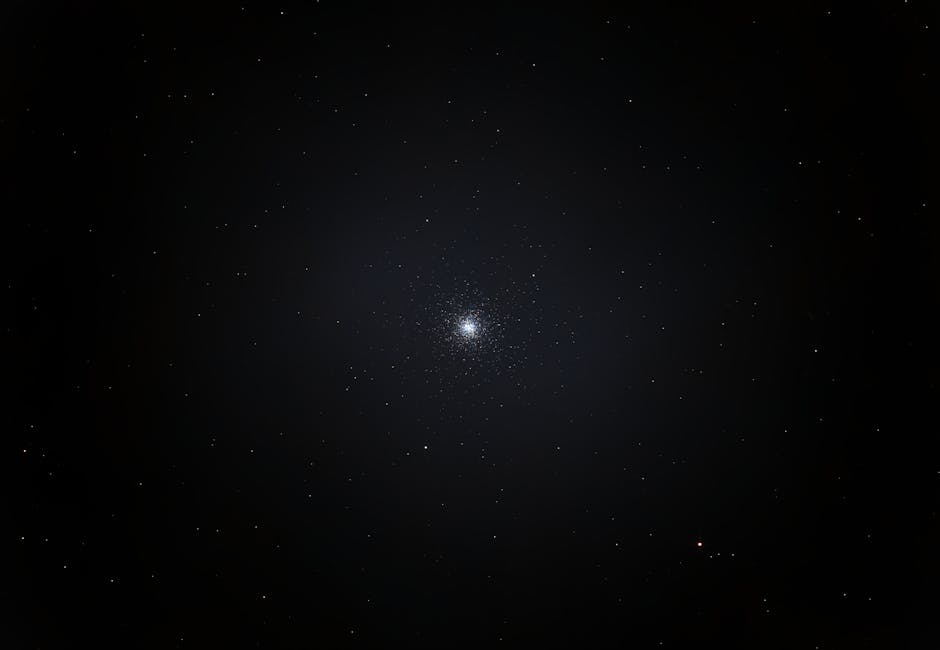
Recent astronomical research indicates that some of the universe's most massive black holes are forged in the dense, dynamic environments of bustling star clusters through a relentless series of violent merging events. This transformative understanding sheds new light on the origins of intermediate-mass and potentially supermassive black holes, fundamentally altering our models of galactic evolution.
Background: The Universe’s Gravitational Giants
The concept of black holes, regions of spacetime where gravity is so strong that nothing, not even light, can escape, has captivated scientists and the public for decades. First theorized by Albert Einstein's general theory of relativity in 1915, their existence was initially a mathematical curiosity. It wasn't until the mid-20th century that physicists like John Wheeler coined the term "black hole" and their physical reality began to be seriously considered, supported by observational evidence in the latter half of the century.
Categorizing Black Holes: A Spectrum of Mass
Astronomers typically classify black holes into several categories based on their mass. Stellar-mass black holes, the most common type, form from the collapse of massive stars, generally ranging from a few times to several tens of solar masses. These are the remnants of stars that have exhausted their nuclear fuel and undergone a supernova explosion.
At the other end of the spectrum are supermassive black holes (SMBHs), which reside at the centers of most large galaxies, including our own Milky Way. These colossal entities can boast masses ranging from hundreds of thousands to billions of times that of our Sun. Their formation mechanism has long been a subject of intense debate, with theories ranging from the direct collapse of massive gas clouds in the early universe to the hierarchical merging of smaller black holes.
Between these two extremes lies a more elusive class: intermediate-mass black holes (IMBHs). These theoretical objects are predicted to have masses between 100 and 100,000 solar masses, bridging the gap between stellar-mass and supermassive black holes. For many years, IMBHs were considered the "missing link" in black hole evolution, with scarce definitive observational evidence. Their existence and formation pathways are crucial for understanding how SMBHs might grow from stellar-mass seeds.
The Role of Star Clusters: Cosmic Crucible
Star clusters are gravitationally bound groups of stars, often classified into two main types: open clusters and globular clusters. Open clusters are relatively young, loosely bound collections of tens to thousands of stars, typically found in the spiral arms of galaxies. Globular clusters, however, are ancient, tightly packed spherical collections containing hundreds of thousands to millions of stars. These dense environments, often orbiting the halos of galaxies, are among the oldest structures in the universe, providing a unique laboratory for studying stellar dynamics and black hole formation.
A third, even denser type of cluster, known as a nuclear star cluster (NSC), is found at the very center of many galaxies, often surrounding a supermassive black hole. These NSCs are among the densest stellar environments known, with stellar densities orders of magnitude higher than globular clusters. Such extreme conditions create an ideal environment for frequent stellar interactions, including close encounters and mergers.
For decades, astronomers have speculated that these dense stellar environments could serve as nurseries for black hole growth. The sheer number of stars, combined with their close proximity, increases the likelihood of interactions that could lead to the formation of binary black holes or the capture of black holes by a central, more massive object.
The Dawn of Gravitational Wave Astronomy
The landscape of black hole research underwent a revolutionary transformation with the advent of gravitational wave astronomy. In 2015, the Laser Interferometer Gravitational-Wave Observatory (LIGO) made the first direct detection of gravitational waves, ripples in spacetime predicted by Einstein a century earlier. This landmark observation, designated GW150914, originated from the merger of two stellar-mass black holes, each about 30 solar masses, forming a new black hole of approximately 62 solar masses.
This discovery not only confirmed a major prediction of general relativity but also opened an entirely new window into the universe, allowing scientists to "hear" the cosmic symphony of merging black holes and neutron stars. Subsequent detections by LIGO and its European counterpart, Virgo, have revealed a population of stellar-mass black holes heavier than previously thought possible, with some exceeding 60 solar masses. These heavier black holes posed a challenge to traditional stellar evolution models, suggesting that new or enhanced formation mechanisms might be at play. Gravitational wave astronomy provided the direct evidence needed to test theories about black hole growth in extreme environments.
Key Developments: Mergers in Busy Clusters
The recent research, leveraging advanced astrophysical simulations and observational inferences from gravitational wave detections, has zeroed in on the critical role of dense star clusters in building up the most massive black holes. The findings suggest that these cosmic nurseries are not just passive environments but active crucibles where a relentless series of violent merging events drives black hole growth to unprecedented scales.
The Mechanism: Runaway Mergers in Dense Cores
The core of this new understanding lies in the dynamic processes within busy star clusters. In these environments, hundreds of thousands to millions of stars are packed into a relatively small volume, typically a few light-years across. This extreme density dramatically increases the probability of gravitational interactions between stars and, crucially, between black holes formed from the collapse of massive stars within the cluster.
Mass segregation is a key initial step. Over time, heavier objects within a star cluster tend to sink towards its center due to dynamical friction, a process where heavier objects lose orbital energy by interacting with lighter objects. This means that stellar-mass black holes, being among the most massive objects in a cluster, naturally migrate to the cluster's core.
Once concentrated in the core, these black holes find themselves in a highly dynamic and crowded environment. The close proximity leads to frequent encounters, forming binary black hole systems. These binaries can then interact with other black holes or stars, leading to complex three-body or even higher-order interactions. Such interactions can destabilize existing binaries, lead to new binary formations, or result in ejections from the cluster. Crucially, they can also facilitate the inspiral and merger of black hole binaries.
The "violent merging events" described in the research refer to this rapid succession of gravitational wave-emitting inspirals. Unlike isolated binary black hole mergers in the galactic field, which are relatively rare, the cluster environment provides a continuous supply of black holes and the gravitational nudges necessary to bring them together. A black hole formed from a merger (a "second-generation" black hole) is even more massive and thus more prone to sink further into the cluster core and participate in subsequent mergers, creating a runaway growth scenario. This process is akin to a cosmic game of billiards, but with gravity as the primary force, where collisions result in fusion rather than simple rebounds.
Computational Models and Observational Clues
This groundbreaking research relies heavily on sophisticated N-body simulations, which model the gravitational interactions of hundreds of thousands to millions of particles (representing stars and black holes) over astronomical timescales. These simulations can track the trajectories, interactions, and eventual fates of black holes within a cluster, revealing the intricate dance that leads to mergers. Modern supercomputers allow these simulations to incorporate increasingly realistic physics, including stellar evolution, stellar winds, and general relativistic effects for black hole mergers.
The simulations demonstrate that within the most massive and densest star clusters, particularly globular clusters and nuclear star clusters, a significant fraction of stellar-mass black holes can merge multiple times. Each merger increases the mass of the resulting black hole, gradually building it up into the intermediate-mass range. Some simulations predict that a single, dominant IMBH can form in the core of a cluster through this "hierarchical merging" process, acting as a gravitational anchor around which other black holes and stars orbit.
Observational evidence from gravitational wave detectors like LIGO and Virgo provides crucial validation for these theoretical models. The detection of black hole mergers involving masses greater than 50 solar masses, such as GW190521, a merger of two black holes around 85 and 66 solar masses forming a 142-solar-mass black hole, strongly hints at the existence of black holes formed through prior mergers. Such high-mass black holes are difficult to explain solely through single stellar collapse and are more consistent with a scenario where black holes grow by consuming other black holes, particularly in dense environments. The specific characteristics of the gravitational wave signals, such as their mass ratios and spins, can also provide clues about their formation environment, with some signals being more indicative of a dynamical origin in star clusters.
The “Busy” Aspect: Density and Dynamics
The term "busy star clusters" is key. It emphasizes the high stellar density and the dynamic nature of these environments. It's not just the presence of black holes, but the constant gravitational interactions, close encounters, and the resulting formation and dissolution of binary systems that drive the merger rate.
In these dense environments, the escape velocity can be high enough to retain the kick imparted to a newly formed black hole during a merger. When two black holes merge, the gravitational waves emitted are often anisotropic, meaning they are not perfectly uniform in all directions. This anisotropy can impart a "kick" to the newly formed, more massive black hole, sending it recoiling through space. If this kick is too strong, the black hole can be ejected from its host cluster, preventing further growth. However, in very massive and dense clusters, the escape velocity can be high enough for the merged black hole to be retained, allowing it to participate in further mergers and continue its growth. This retention fraction is a critical parameter in determining the efficiency of black hole growth in clusters.
Furthermore, the presence of gas, particularly in nuclear star clusters, can play an additional role. While the primary mechanism discussed here is gravitational merging, gas accretion can also contribute to black hole growth. In a dense stellar environment, gas can be funneled towards the central region, providing a fuel source for any growing black hole. However, the new research primarily emphasizes the stellar-dynamical pathway, where black hole-black hole mergers are the dominant growth mechanism in these specific environments.
Comparison to Other Formation Theories
This cluster-based merger scenario offers a compelling alternative or complementary pathway to other theories of intermediate-mass and supermassive black hole formation. Previously, one prominent theory for SMBH seeds involved the direct collapse of massive gas clouds in the early universe, forming black holes of thousands to tens of thousands of solar masses. Another involved the remnants of Population III stars (the first generation of stars), which are predicted to have been very massive and could have left behind black holes of hundreds of solar masses.
The cluster merger model provides a robust mechanism to bridge the gap from stellar-mass black holes (tens of solar masses) to IMBHs (hundreds to thousands of solar masses), and potentially even larger, within relatively confined regions. It explains the high-mass stellar black holes observed by LIGO/Virgo and offers a natural pathway for their subsequent growth. It also helps to explain why IMBHs have been so difficult to find, as they might be hidden within the bright, dense cores of star clusters, or their existence is transient as they quickly grow into larger objects.
The new research suggests that these "busy" clusters are not merely sites where black holes passively exist, but active factories where black holes are continuously processed, merged, and grown through a violent, dynamic evolution. This understanding reshapes our view of how the universe builds its most extreme gravitational entities.
Impact: Reshaping Our Cosmic Understanding
The discovery that busy star clusters are efficient factories for building massive black holes through violent merging events has profound implications across multiple fields of astrophysics. It fundamentally alters our understanding of black hole formation, galactic evolution, and the types of signals we expect to detect with gravitational wave observatories.
Refining Models of Galaxy Formation and Evolution
The existence and growth of supermassive black holes (SMBHs) at the centers of galaxies are intimately linked to the evolution of their host galaxies. The observed correlation between the mass of a galaxy's central black hole and properties of its host galaxy's bulge (like its stellar velocity dispersion, known as the M-sigma relation) suggests a co-evolutionary process. However, the precise mechanisms by which SMBHs are seeded and grow to their colossal sizes have remained a significant puzzle.
This new research provides a powerful pathway for the formation of intermediate-mass black holes (IMBHs), which are thought to be the "seeds" from which SMBHs grow. If dense star clusters, particularly nuclear star clusters at galactic centers, can efficiently produce IMBHs through runaway mergers, it offers a concrete mechanism for seeding SMBHs early in the universe's history. These IMBHs could then continue to grow by accreting gas and dust, merging with other IMBHs, or even consuming smaller stellar-mass black holes, eventually reaching supermassive scales.
This model suggests that the early universe, rich in dense, young star clusters, could have been a prolific environment for IMBH formation. Understanding this seeding mechanism is crucial for explaining the rapid appearance of very massive SMBHs observed at high redshifts (early universe), which current models struggle to explain solely through gas accretion or direct collapse scenarios. It provides a more robust framework for linking the formation of the first stars and clusters to the birth of the first quasars and active galactic nuclei.
Guiding the Search for Intermediate-Mass Black Holes
For decades, IMBHs have been the elusive "missing link" in the black hole mass spectrum. Definitive observational evidence for their existence has been scarce. This research provides a strong theoretical framework for where to look for them: the dense cores of star clusters, particularly globular clusters and nuclear star clusters.
The model predicts that IMBHs should be present in a significant fraction of these environments, acting as gravitational anchors. This insight will guide future observational campaigns using both electromagnetic telescopes and gravitational wave detectors. Astronomers can now focus their efforts on searching for specific signatures of IMBHs within these clusters, such as the unusual motions of stars orbiting a central unseen mass, or X-ray flares from gas accretion onto an IMBH.
Furthermore, the gravitational wave signals produced by mergers involving IMBHs would be distinct from those of stellar-mass black hole mergers. While current ground-based detectors like LIGO/Virgo are most sensitive to stellar-mass black hole mergers, future detectors with enhanced sensitivity or different frequency ranges will be crucial for detecting IMBH mergers. This research helps define the expected mass ranges and merger rates for IMBHs, informing the design and search strategies of these next-generation observatories.
Implications for Gravitational Wave Astronomy
The finding directly impacts the interpretation of current gravitational wave detections and the planning for future observatories. The detection of black holes with masses in the "upper end" of the stellar-mass range (e.g., >50 solar masses) by LIGO/Virgo has already hinted at non-standard formation mechanisms, with cluster mergers being a leading candidate. This research strengthens that interpretation.
More importantly, it predicts a population of IMBH mergers that future gravitational wave observatories, such as the space-based Laser Interferometer Space Antenna (LISA) or proposed ground-based detectors like the Einstein Telescope and Cosmic Explorer, will be uniquely positioned to detect. LISA, sensitive to lower frequencies, would be able to detect the inspiral and merger of IMBHs with each other, or IMBHs merging with stellar-mass black holes, events that would be invisible to current ground-based detectors. The characteristic "chirp" of such events would provide direct evidence for the hierarchical growth of black holes in clusters.
The research also helps predict the expected rates of such mergers, informing estimates of the cosmic event rate for various gravitational wave sources. This is critical for assessing the scientific yield of future missions and for understanding the overall gravitational wave background of the universe.
Influence on Theoretical Models of Stellar Dynamics and Cluster Evolution
Beyond black holes, this research also deepens our understanding of the dynamics of star clusters themselves. The presence of a growing IMBH in the core of a cluster significantly influences the motions and fates of the surrounding stars. It acts as a strong gravitational perturber, affecting stellar orbits, potentially leading to more frequent stellar collisions, and altering the overall evolution of the cluster.
The study of black hole dynamics within clusters provides new insights into processes like core collapse, mass segregation, and the evaporation of clusters over cosmic timescales. It highlights the complex interplay between stellar evolution, gravitational dynamics, and black hole growth in these dense environments. This understanding will lead to more refined and accurate models of star cluster evolution, incorporating the full spectrum of black hole populations and their interactions.
In summary, this research provides a powerful new narrative for how some of the universe's most enigmatic objects, massive black holes, are forged. It connects the microscopic physics of stellar collapse to the macroscopic evolution of galaxies, offering a cohesive framework that integrates insights from stellar dynamics, general relativity, and observational astronomy.
What Next: Future Milestones and Discoveries
The finding that busy star clusters are crucibles for building massive black holes through violent mergers opens up numerous avenues for future research and observational campaigns. The coming decades promise a wealth of new data and theoretical advancements that will further refine this understanding and potentially reveal even more surprising cosmic phenomena.
Next-Generation Gravitational Wave Observatories
Perhaps the most direct impact of this research will be felt in the field of gravitational wave astronomy. While LIGO and Virgo have revolutionized our understanding of stellar-mass black hole mergers, they are limited in their sensitivity to the lower-frequency gravitational waves emitted by more massive black hole systems, such as those involving IMBHs.
The European Space Agency's Laser Interferometer Space Antenna (LISA) mission, slated for launch in the mid-2030s, is designed to detect gravitational waves in a much lower frequency range. LISA will be uniquely capable of observing the inspiral and merger of IMBHs, as well as the mergers of stellar-mass black holes with IMBHs. Detecting these events will provide direct, unequivocal evidence for the hierarchical growth of black holes in star clusters. The specific characteristics of the gravitational wave signals—such as the mass ratios, spins, and eccentricities of the merging black holes—will offer invaluable data to validate or refine the cluster merger models.
On the ground, proposed next-generation detectors like the Einstein Telescope (ET) in Europe and Cosmic Explorer (CE) in the United States aim to be significantly more sensitive than current observatories, extending their reach to detect mergers at much greater distances and potentially providing a clearer view of the high-mass end of the stellar black hole population, including those formed through multiple mergers. These observatories will also probe the "intermediate-frequency gap" between ground-based and space-based detectors, potentially revealing IMBH formation through the most energetic and massive stellar collapses.
High-Resolution Observational Campaigns
While gravitational waves provide direct evidence of mergers, electromagnetic observations remain crucial for understanding the environments in which these mergers occur. The James Webb Space Telescope (JWST), with its unparalleled infrared sensitivity and resolution, is already peering into the hearts of dense star clusters and distant galaxies with unprecedented clarity. JWST can resolve individual stars and detect signatures of gas and dust in the immediate vicinity of potential IMBHs, providing clues about their accretion activity.
Future telescopes, both ground-based (like the upcoming Extremely Large Telescopes) and space-based, will continue to push the boundaries of resolution and sensitivity. These instruments will be vital for:
* Directly detecting IMBHs: By observing the peculiar motions of stars orbiting an unseen central mass in cluster cores, or by identifying bright X-ray or radio emission from gas accreting onto an IMBH.
* Studying the dynamics of clusters: Mapping the distribution and velocities of stars and black holes within clusters to understand the processes of mass segregation and dynamical interactions that lead to mergers.
* Characterizing progenitor clusters: Identifying the types of star clusters that are most efficient at producing massive black holes, and studying their properties (age, metallicity, density) to understand the conditions conducive to runaway growth.
Refinement of Astrophysical Simulations
The theoretical foundation of this research relies heavily on sophisticated N-body and hydrodynamic simulations. Future work will involve pushing these simulations to even greater levels of detail and complexity. This includes:
* Higher resolution and larger particle numbers: Simulating more stars and black holes with greater precision to capture the fine-grained dynamics of cluster cores.
* Incorporating more complete physics: Including detailed stellar evolution models, stellar feedback (winds, supernovae), gas dynamics, and more accurate general relativistic treatments for black hole interactions and mergers.
* Exploring different initial conditions: Varying the initial properties of star clusters (mass, density, metallicity, initial black hole population) to understand their impact on black hole growth pathways and merger rates.
* Connecting cluster-scale simulations to galactic-scale simulations: Bridging the gap between the formation of IMBHs in clusters and their subsequent migration and growth into SMBHs at the centers of galaxies.
Multi-Messenger Astronomy
The future of astrophysics increasingly lies in multi-messenger astronomy, combining observations from different cosmic messengers: gravitational waves, electromagnetic radiation, neutrinos, and cosmic rays. For black hole mergers in star clusters, this approach is particularly promising.
While most black hole mergers are not expected to have bright electromagnetic counterparts, there is a possibility that some mergers occurring in gas-rich environments, or those involving very massive black holes, could produce detectable flares of light. Correlating gravitational wave detections with simultaneous electromagnetic observations (even if faint) would provide invaluable information about the immediate environment of the merger and the physics of extreme gravity.
The search for such counterparts will be a key focus, utilizing rapid-response telescopes across the electromagnetic spectrum, triggered by alerts from gravitational wave observatories.
Understanding the Transition to Supermassive Black Holes
Ultimately, a major goal is to fully understand how the IMBHs formed in star clusters transition into the supermassive black holes that dominate galactic centers. This involves studying the fate of these clusters themselves. Do they eventually dissolve, releasing their IMBHs into the galactic field? Or do they sink to the galactic center, contributing their IMBHs directly to the central SMBH?
The merger of nuclear star clusters, each potentially harboring an IMBH, could be a significant pathway for SMBH growth in the context of galaxy mergers. Future research will explore these larger-scale interactions and their role in the hierarchical assembly of supermassive black holes.
In essence, the discovery of busy star clusters as black hole factories marks a crucial step in unraveling one of the universe's most enduring mysteries. The coming era of advanced observatories and sophisticated simulations promises to transform our understanding of these cosmic giants, revealing the intricate dance of gravity and matter that shapes our universe.