
Scientists unearth Southeast Asia’s largest dinosaur in Thailand – Manorama Yearbook
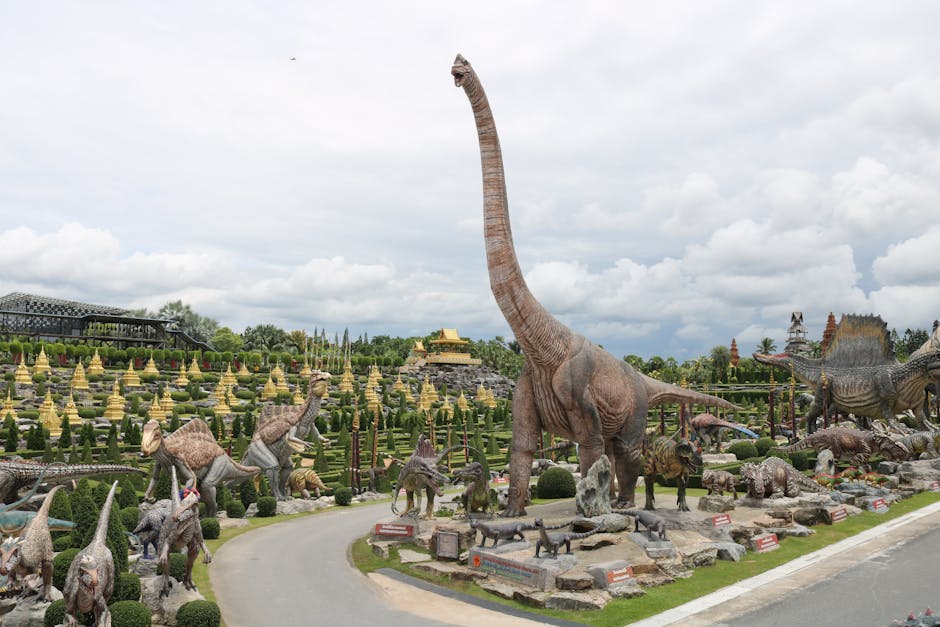
A groundbreaking paleontological expedition in northeastern Thailand has led to the unearthing of what scientists confirm is Southeast Asia’s largest dinosaur. This monumental discovery, unfolding across the ancient geological formations of the Khorat Plateau, represents a significant advancement in understanding the prehistoric life that once thrived in this region, offering unparalleled insights into the colossal herbivores that roamed the Earth millions of years ago.
Background: A Legacy of Ancient Giants in the Land of Smiles
Thailand has long been recognized as a fertile ground for paleontological discoveries, particularly within the Mesozoic era strata of its northeastern provinces. The nation’s rich fossil record, primarily concentrated in the Khorat Plateau, has yielded a diverse array of ancient life forms, ranging from formidable carnivores to various herbivorous species, consistently placing Thailand at the forefront of Southeast Asian paleontology.
The history of significant dinosaur finds in Thailand dates back several decades, with early explorations laying the groundwork for subsequent, more systematic excavations. Pioneering paleontologists, often in collaboration with international experts, began unearthing fossilized remains that hinted at a vibrant prehistoric ecosystem. The Phu Wiang National Park in Khon Kaen province, for instance, gained international prominence in the late 20th century following the discovery of numerous dinosaur fossils. This area became synonymous with Thai paleontology, establishing a baseline for future explorations.
Among the earliest and most celebrated finds was *Phuwiangosaurus sirindhornae*, a sauropod named in honor of Her Royal Highness Princess Maha Chakri Sirindhorn. This long-necked herbivore, identified in the early 1990s, provided crucial evidence of large dinosaur presence in the region during the Early Cretaceous period. Its discovery not only solidified Thailand's paleontological standing but also inspired a new generation of local researchers and enthusiasts. Another pivotal find was *Siamotyrannus isanensis*, a medium-sized theropod, which offered insights into the predatory dynamics of ancient Thailand and hinted at evolutionary links within the tyrannosaur lineage, though its exact phylogenetic placement remains a subject of ongoing research. These initial discoveries underscored the vast potential of Thailand’s geological landscape to reveal previously unknown chapters of Earth’s history.
The geological context of these finds is primarily rooted in the Khorat Group, a thick sequence of Mesozoic sedimentary rocks that span across northeastern Thailand and parts of Laos. Within this group, formations such as the Phu Kradung Formation (Late Jurassic) and the Sao Khua Formation (Early Cretaceous) are particularly prolific in dinosaur fossils. The Sao Khua Formation, characterized by its reddish-brown sandstone and mudstone, has consistently yielded a rich assemblage of vertebrate fossils, including sauropods, theropods, and ornithopods, suggesting a diverse and thriving ancient environment characterized by vast floodplains and meandering river systems. The specific lithology and depositional environment of these formations provide critical clues about the paleoecology and paleobiogeography of the region.
Globally, sauropods represent some of the most iconic and awe-inspiring dinosaurs due to their immense size and distinctive long necks and tails. From the colossal *Argentinosaurus* and *Patagotitan* of South America to the *Mamenchisaurus* of China, these giants dominated terrestrial ecosystems for millions of years. The discovery of large sauropods in Asia, particularly in Southeast Asia, is crucial for understanding the global distribution and evolutionary pathways of these magnificent creatures. Continental drift and plate tectonics played a significant role in shaping dinosaur biogeography, and fossil finds in regions like Thailand help scientists piece together the ancient landmasses and migratory routes that existed during the Mesozoic Era. The presence of distinct sauropod lineages in Southeast Asia can offer insights into whether these populations evolved in isolation or maintained connections with those on other continents.
The initial clues leading to the recent discovery often originate from local communities. Villagers, accustomed to the landscape and its geological features, frequently report unusual rock formations or bone fragments exposed by erosion or construction. In this instance, a local resident, noticing exceptionally large, unusual bone fragments protruding from a streambed after seasonal rains, alerted authorities. This initial report triggered a preliminary geological survey by the Department of Mineral Resources, which quickly identified the potential for a significant fossil site.
Following the initial assessment, a team comprising paleontologists, geologists, and excavation specialists was assembled. Their preliminary inspection confirmed the presence of large fossilized bone material, indicating a sauropod of considerable size. The site was immediately secured, and meticulous planning commenced for a full-scale excavation, marking the beginning of an ambitious scientific endeavor poised to redefine the understanding of Southeast Asia’s prehistoric fauna. The process from initial sighting to full excavation underscores the vital role of local communities in scientific discovery and the systematic approach required for paleontological research.
Key Developments: Unearthing a Colossus
The ongoing excavation of Southeast Asia’s largest dinosaur has been a meticulous and challenging undertaking, revealing a wealth of information about this ancient giant and its prehistoric world. The site itself, nestled within a remote, undulating landscape of northeastern Thailand, presents both geological richness and logistical hurdles.
The excavation site is characterized by its distinctive reddish-brown sedimentary layers, typical of the Early Cretaceous Sao Khua Formation. These strata, composed of fine-grained sandstones and mudstones, indicate an ancient environment dominated by vast floodplains, meandering rivers, and possibly seasonal lakes. The specific geological context suggests a depositional setting where the dinosaur’s remains were rapidly buried by sediment, aiding in their exceptional preservation. The terrain, however, is often challenging, with steep inclines and dense vegetation requiring extensive groundwork to establish safe and accessible excavation zones.
Excavation efforts have been particularly demanding due to the sheer size of the fossilized bones and the fragile nature of the surrounding matrix. Paleontologists and technicians have employed a suite of specialized techniques to carefully unearth the remains. Precision mapping using GPS and photogrammetry ensures every bone fragment's exact position is recorded, crucial for subsequent reconstruction. Delicate tools, ranging from dental picks to air scribes, are used to remove the surrounding rock without damaging the brittle bone. Once exposed, the fossils are meticulously cleaned, photographed, and documented. For larger, more fragile elements, a protective plaster jacket is applied *in situ* to stabilize the bone before it can be safely lifted and transported from the site. This process, often requiring multiple days for a single large bone, underscores the painstaking nature of paleontological fieldwork.
The dinosaur itself has been provisionally identified as a sauropod, a group of long-necked, quadrupedal, herbivorous dinosaurs. Initial morphological characteristics observed from the excavated bones, including exceptionally large vertebrae, robust limb bones, and fragments of the pelvic girdle, strongly indicate an animal of unprecedented scale for the region. The size and structure of these bones suggest a creature far exceeding previously discovered sauropods in Southeast Asia. While a definitive genus and species name are pending further analysis and formal publication, preliminary comparisons point towards a unique lineage, potentially representing a new genus within the broader sauropod clade, possibly related to titanosaurs or mamenchisaurids, though distinct features are emerging. The completeness of certain skeletal elements, particularly sections of the vertebral column and limb bones, is diagnostic, allowing for detailed anatomical study and comparison with global sauropod faunas.
Based on the size of the recovered bones, scientists have made preliminary estimates of the dinosaur’s dimensions. The creature is projected to have measured upwards of 30 meters (approximately 100 feet) in length and could have stood over 15 meters (50 feet) tall at the shoulder, with an estimated weight potentially exceeding 50 metric tons. These figures place it among the largest land animals to have ever lived, rivaling some of the most enormous sauropods found worldwide. Geological dating of the fossil-bearing strata confirms its existence during the Early Cretaceous period, roughly 120 to 130 million years ago, a time when Earth’s continents were still undergoing significant rearrangement. Paleontological reconstructions, informed by comparative anatomy with known sauropods, depict a colossal herbivore with a proportionally long neck and tail, a massive barrel-shaped body, and sturdy, pillar-like legs, perfectly adapted for browsing on high foliage.
The paleoenvironment during the Early Cretaceous in what is now northeastern Thailand was vastly different from today. Evidence from associated fossil finds, including plant impressions and microfossils, suggests a lush, subtropical landscape. This region was likely characterized by extensive floodplains, deltaic systems, and possibly vast, shallow freshwater bodies, supporting a rich flora of ferns, cycads, and early flowering plants. Such an environment would have provided abundant food sources for a gigantic herbivore, consuming vast quantities of vegetation daily. Other fossil evidence at the site, though less prominent than the sauropod remains, includes fragments of smaller vertebrates, fish scales, and invertebrate traces, painting a picture of a diverse ecosystem. This sauropod likely co-existed with various other dinosaurs, including smaller ornithopods and potentially medium-sized theropod predators, though its immense size would have rendered it largely immune to predation as an adult.
Scientific analysis of the excavated bones is now underway in specialized laboratories. Techniques such as high-resolution CT scans are being used to peer inside the fossilized bones, revealing internal structures like growth rings that can provide insights into the dinosaur's growth rates, age, and metabolic activity. Histological studies of bone cross-sections can further elucidate bone density, vascularization, and stress patterns, offering clues about its locomotion and physiology. Isotopic analysis of bone material can help reconstruct its diet and the ancient climate, by examining the ratios of stable isotopes of elements like carbon and oxygen. These advanced analytical methods are crucial for extracting maximum scientific information from the precious fossils.
The project has fostered significant collaboration between Thai paleontologists and international institutions, including universities and museums from Japan, France, and the United States. This international partnership facilitates the exchange of expertise, resources, and cutting-edge research methodologies, enhancing the scientific rigor and global impact of the discovery. Preliminary findings have already been presented at paleontological conferences, and detailed scientific papers are being prepared for submission to peer-reviewed journals, ensuring that this monumental discovery contributes broadly to the global understanding of dinosaur evolution and paleoenvironments.
Impact: Reshaping Regional Paleontology and National Identity
The discovery of Southeast Asia’s largest dinosaur in Thailand carries profound implications across multiple domains, from fundamental scientific understanding to national pride, economic development, and public education. It represents a watershed moment for regional paleontology and significantly elevates Thailand's stature on the global scientific stage.
Scientifically, this colossal sauropod fills a critical gap in the fossil record of Southeast Asia, a region whose paleontological history, while rich, still holds many unknowns compared to well-studied continents like North America or Patagonia. The new find provides crucial data for understanding sauropod evolution and biogeography, particularly the diversification of these giant herbivores in Gondwanan and Laurasian landmasses. Its unique morphological characteristics may challenge existing theories about dinosaur distribution and the connectivity of ancient landmasses, potentially revealing previously unrecognized migratory routes or instances of endemic evolution. Furthermore, by providing a detailed snapshot of a specific Early Cretaceous ecosystem, the discovery aids in understanding ancient environmental conditions, climate change patterns, and the complex interrelationships between various species, offering a deep-time perspective on ecological resilience and adaptation.
For Thailand, this discovery is a source of immense national and regional pride. It firmly establishes the nation as a significant paleontological hotspot, capable of yielding world-class fossil finds. The monumental scale of the dinosaur resonates deeply within the public consciousness, inspiring local scientists, researchers, and students to pursue careers in natural sciences. It cultivates a renewed sense of national identity linked to Thailand's ancient heritage, showcasing the country not only for its vibrant culture and natural beauty but also for its profound scientific contributions to understanding Earth's past. This pride is often translated into increased support for scientific research and conservation efforts.
The economic implications are also substantial. The potential for increased paleontological tourism to the northeastern region is considerable. Such a discovery can transform a relatively unknown area into a destination for science enthusiasts, researchers, and curious travelers from around the world. This influx of visitors can stimulate local economies through demand for accommodation, food, transportation, and guided tours. It can lead to the development of improved infrastructure, including roads, visitor centers, and local museums, creating jobs directly related to the excavation, fossil preparation, research, and tourism sectors. The establishment of dedicated facilities for fossil display and interpretation can become a cornerstone of regional economic diversification.
Beyond scientific and economic impacts, the discovery offers unparalleled opportunities for education and public awareness. Museums, such as the Sirindhorn Museum or the National Museum of Natural History in Bangkok, will likely become key venues for exhibiting the dinosaur, creating engaging and informative displays for the public. Educational programs tailored for schools and universities can leverage this discovery to inspire interest in science, geology, and natural history among younger generations. Public outreach initiatives, including documentaries, interactive exhibits, and lectures, can make complex scientific concepts accessible to a broader audience, fostering a deeper appreciation for biodiversity, geological time, and the scientific process. This educational dividend is crucial for building a scientifically literate society and encouraging future generations to engage with critical scientific questions.
Moreover, the discovery raises significant awareness about the importance of fossil site preservation and conservation. It highlights the need for robust legal frameworks and community involvement to protect these irreplaceable natural heritage sites from illicit collection, damage, or neglect. The attention drawn by such a find often leads to increased funding and policy support for paleontological research and the long-term stewardship of fossil localities, ensuring that future generations can continue to learn from these ancient treasures.
What Next: From Excavation to Global Exhibit
The unearthing of Southeast Asia’s largest dinosaur marks not an end, but a significant beginning in a multi-faceted scientific and public engagement journey. The path forward involves meticulous long-term planning, sustained research, strategic public outreach, and international collaboration to fully realize the potential of this monumental discovery.
The immediate future involves the continuation of excavation and preparation activities. While significant portions of the sauropod have been recovered, paleontologists anticipate that more skeletal elements may still be embedded within the geological layers at the primary site or in adjacent areas. Long-term plans for the excavation site include establishing a permanent field station to facilitate ongoing research and monitoring, potentially exploring deeper strata for older fossils. Once large fossil blocks are carefully removed from the site, they are transported to specialized laboratories equipped for fossil preparation. This process is painstakingly slow, involving the meticulous removal of surrounding rock (matrix) using micro-tools, air scribes, and even acidic baths for certain rock types. Each bone must be cleaned, repaired, and consolidated with specialized resins to prevent further degradation. The development of advanced, climate-controlled facilities for fossil preparation and storage is crucial, as is the training of skilled technicians capable of handling these irreplaceable specimens.
Following preparation, the focus shifts to intensive further research and publication. Detailed morphological studies will involve comparing every bone and feature of the newly discovered dinosaur with known sauropod species from around the world. This comparative anatomy will help refine its phylogenetic placement, determining its evolutionary relationships to other giants. If well-preserved cellular structures are found, advanced techniques like molecular paleontology might be explored, though ancient DNA recovery from dinosaur fossils remains exceptionally challenging. The findings will be rigorously peer-reviewed and published in leading international scientific journals, ensuring that the scientific community worldwide has access to the data and analyses. This will be followed by presentations at international conferences and workshops, fostering dialogue and collaboration among global paleontological experts.
A major milestone will be the creation of museum exhibitions and reconstructions. Plans are already being formulated for a permanent, awe-inspiring exhibit in a prominent national museum, likely the Sirindhorn Museum in Kalasin or the National Museum of Natural History in Bangkok. This exhibit will feature a life-size skeletal mount of the colossal dinosaur, meticulously reconstructed from the recovered bones and informed by scientific understanding of sauropod anatomy. Artistic reconstructions, depicting the dinosaur in its ancient environment with realistic skin textures and coloration, will bring the creature to life for visitors. Interactive displays, virtual reality experiences, and educational materials will provide context, explaining the science behind the discovery, the geological history of Thailand, and the broader story of dinosaur evolution. The potential for traveling exhibitions, both domestically and internationally, will allow a wider global audience to appreciate Thailand’s unique paleontological heritage.
Site preservation and conservation are paramount for the long-term legacy of this discovery. Measures are being implemented to protect the excavation site from environmental degradation, such as erosion, and from unauthorized collection or vandalism. This includes establishing protected zones, implementing strict access controls, and potentially developing a small, on-site interpretive center that allows controlled public viewing while safeguarding the integrity of the fossil locality. Furthermore, the Thai government is reviewing and strengthening legal frameworks related to fossil protection and heritage conservation, ensuring that such invaluable discoveries are managed responsibly for future generations. Community engagement programs are also crucial, empowering local residents to act as stewards of their natural heritage.
Finally, international collaboration will continue to be a cornerstone of this project. Ongoing partnerships with leading paleontological institutions globally will facilitate the exchange of research methodologies, access to specialized equipment, and joint funding initiatives for future expeditions and analyses. Exchange programs for researchers and students will foster capacity building within Thailand’s scientific community, solidifying its position as a key player in the global paleontological landscape. This collaborative spirit ensures that the discovery of Southeast Asia’s largest dinosaur not only enriches Thailand but also contributes significantly to the collective human understanding of life’s ancient past.